★★★★★
"AHHAC delivered our 22-zone underfloor system on time, on budget and to spec. The crew were tidy, the documentation was thorough, and the commissioning was textbook."
David Chen
Custom Builder · Mosman, NSW
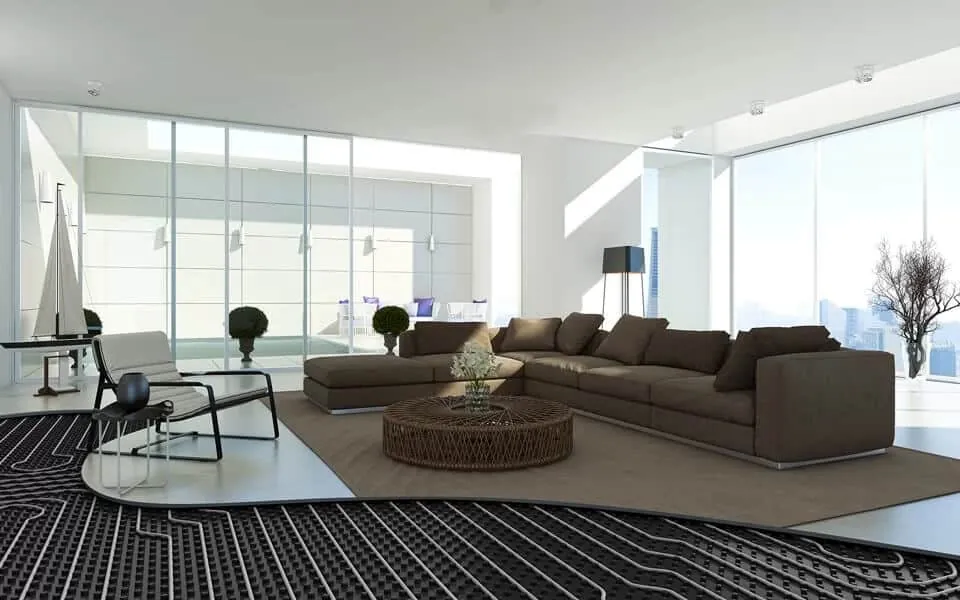
Stepping out of the shower onto a warm stone floor isn't a luxury — it's a quality-of-life upgrade we can install in any bathroom renovation.
A heated bathroom floor uses either hydronic pipes laid in the screed, best for new builds and homes with hydronic heating, or a low-profile electric mat under the tile adhesive, best for single-room renovations. AHHAC installs both across Sydney, Melbourne and Brisbane. An electric mat adds about a day before tiling, while hydronic in-screed takes 2–3 days plus at least seven days of screed cure. Running the floor for 30 minutes after a shower dries the tiles.
Reviewed by the AHHAC Technical Team — licensed plumbers & hydronic engineers, NSW Lic 262528C.How we write & review

For new bathroom builds we run hydronic underfloor pipes in the screed before tiling. For renovations we use a low-profile electric underfloor mat under the tile adhesive bed (faster, no plumbing required, similar comfort outcome).
Hydronic is more efficient and pairs with whole-home heating; electric is simpler for single-room retrofits.
A heated bathroom floor is easy to get right and expensive to get wrong, because once the tiles are down there is no second chance. Most of the problems we are asked to look at come from sequencing rather than the heating product, so we plan it with your builder, waterproofer and tiler before demolition starts.
An electric mat must be connected by a licensed electrician. A hydronic floor takes longer to install, but if the rest of the house already runs on hydronic heating it ties into the same system. In that case a mixing valve holds the bathroom loop at underfloor temperatures of around 35–45 °C, even when the boiler or heat pump is feeding hotter water to radiators. Our valves and controls page explains how that protection works.
Who does it not suit? If you rarely use the bathroom, or the floor is suspended timber with no room for insulation, a heated towel rail may give you most of the comfort for less. If you plan to add hydronic heating to the rest of the house within a few years, ask us to rough in hydronic pipes now rather than lay an electric mat you will later outgrow. Read our hydronic underfloor heating overview for the whole-house picture, and the underfloor heating mistakes to avoid before you sign off the tile layout.
Written from on-site experience by the AHHAC Technical Team.
AHHAC's in-house design and service team — licensed plumbers and hydronic engineers (Lic 262528C) who have designed and installed 2,400+ hydronic heating, cooling and hot water systems across Australia since 1998.
Every plumbing and hot water job is assessed on site, carried out by our own licensed plumbers and gasfitters to AS/NZS 3500 (plumbing) and AS/NZS 5601 (gas), pressure-tested and documented, and backed by ongoing service. Nothing is subcontracted out.
New build with planned hydronic heating: hydronic underfloor (efficient, integrated). Renovation with no hydronic system: electric mat (faster install, no plumbing). Comfort outcome is similar; running cost favours hydronic.
Electric mat under tile: 1 day plus tiling. Hydronic in-screed: 2–3 days plus screed cure (7+ days) plus tiling. New-build hydronic: laid before slab pour, no extra time on critical path.
Yes — running the floor for 30 minutes after a shower dries the tiles. Many of our clients run the floor on a timer to dry the bathroom after morning use, saving on bathroom mould and humidity.
"AHHAC delivered our 22-zone underfloor system on time, on budget and to spec. The crew were tidy, the documentation was thorough, and the commissioning was textbook."
"We've worked with AHHAC for 17 years. They've installed and serviced our hot water plant across three commercial buildings — and they pick up the phone on weekends."
"Three mobs quoted us; AHHAC's design was the only one based on a proper heat-loss calculation. The system runs beautifully — the others would've been oversized and expensive."