★★★★★
"AHHAC delivered our 22-zone underfloor system on time, on budget and to spec. The crew were tidy, the documentation was thorough, and the commissioning was textbook."
David Chen
Custom Builder · Mosman, NSW
Slow drain? Sewer back-up? Tree roots? We use camera inspection, hydro-jetting and traditional rodding to clear and resolve any blockage — and document the cause for next time.
Blocked drains in Sydney are commonly caused by tree roots entering the joints of older clay sewer pipes, followed by fat, wipes and broken pipework. AHHAC clears them with hydro-jetting at up to 5,000 psi or mechanical rodding, then runs a camera inspection to record the cause and where it sits. A standard residential blockage typically costs $250–$650 to clear, and cracked pipes can usually be relined without digging up the garden.
Reviewed by the AHHAC Technical Team — licensed plumbers & hydronic engineers, NSW Lic 262528C.How we write & review
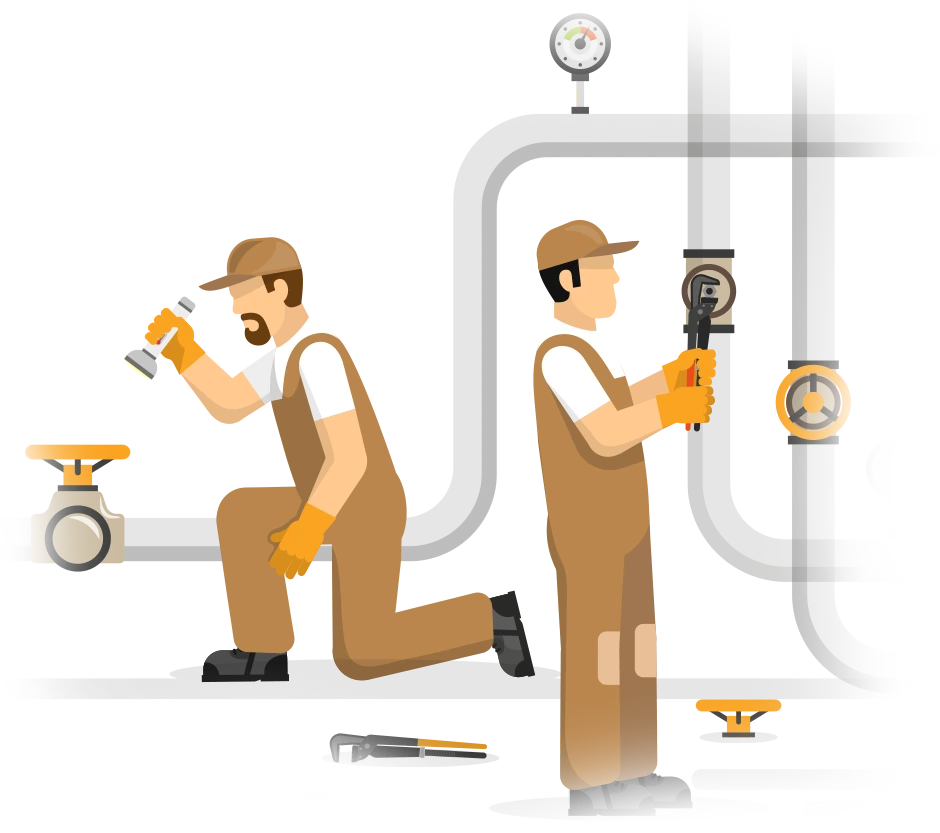
Most blocked drains are a symptom of something bigger — tree root intrusion, broken pipework, fat or grease buildup, or foreign objects. We don't just clear the immediate blockage; we find the cause and explain your options.
Our drain camera inspections produce a recorded video walkthrough of your underground pipework, with reference markers and a written report.
Hydro-jetting: high-pressure water (up to 5,000 psi) cuts through grease, scale and small roots. Best for ongoing maintenance and grease blockages.
Mechanical rodding: spring-steel coils with various heads — best for solid blockages and root masses.
Camera inspection + relining: where a pipe is broken, we can install a cured-in-place liner without digging up your garden.
Much of Sydney's older housing still drains through clay sewer pipe laid in short lengths, and the joints between those lengths are exactly where tree roots find their way in. That is why blocked drains in Sydney tend to come back: clearing the roots fixes the symptom, but the gap in the joint stays open. Catching it early is far cheaper than waiting for an overflow.
After we clear a line we run the camera through it, and that recorded footage is one of the most useful documents you will own about your property. It shows where roots are entering, whether a section has cracked, dropped or collapsed, and the distance to each defect, so any repair is targeted rather than guessed. It also helps settle responsibility. Generally the private sewer line from the house to the connection with the water authority's main is the owner's to maintain, while faults in the main belong to the authority. In strata buildings, shared lines are usually common property.
From there you have three realistic paths. If the pipe is sound and the roots are light, scheduled hydro-jetting keeps it flowing. If joints are open or a section is cracked, relining seals the pipe from the inside without trenching. If a section has collapsed, it needs excavation, and the footage shows exactly where to dig.
Prevention matters too. So-called flushable wipes do not break down like toilet paper, and cooking fat sets hard in cold pipes, so both belong in the bin. Food outlets need grease arrestors pumped out on schedule, which our commercial plumbing crews manage as planned maintenance. If sewage is already coming up through a gully or floor waste, call our plumbing repairs and callouts line. And if the drains are clear but damp patches remain, the fault may be a supply pipe, which is a job for water leak detection.
Written from on-site experience by the AHHAC Technical Team.
AHHAC's in-house design and service team — licensed plumbers and hydronic engineers (Lic 262528C) who have designed and installed 2,400+ hydronic heating, cooling and hot water systems across Australia since 1998.
Every plumbing and hot water job is assessed on site, carried out by our own licensed plumbers and gasfitters to AS/NZS 3500 (plumbing) and AS/NZS 5601 (gas), pressure-tested and documented, and backed by ongoing service. Nothing is subcontracted out.
Yes — hydro-jetting cuts through small to medium roots, mechanical rodding handles large root masses, and pipe relining (no-dig repair) is available for roots that have cracked the pipe. We provide a recorded camera inspection and council-grade certification.
Almost never. We use pipe relining (cured-in-place lining) to repair broken sewer pipes without digging up your garden. Only in extreme cases (pipe collapse, replacement) is excavation needed — and we restore landscaping as part of the job.
Standard residential blockage: typically $250–$650 depending on access and severity. Severe root masses or pipe damage: more — we always provide a fixed quote after the camera inspection before doing the major work.
"AHHAC delivered our 22-zone underfloor system on time, on budget and to spec. The crew were tidy, the documentation was thorough, and the commissioning was textbook."
"We've worked with AHHAC for 17 years. They've installed and serviced our hot water plant across three commercial buildings — and they pick up the phone on weekends."
"Three mobs quoted us; AHHAC's design was the only one based on a proper heat-loss calculation. The system runs beautifully — the others would've been oversized and expensive."