★★★★★
"AHHAC delivered our 22-zone underfloor system on time, on budget and to spec. The crew were tidy, the documentation was thorough, and the commissioning was textbook."
David Chen
Custom Builder · Mosman, NSW
Flat-plate and evacuated-tube solar collectors, paired with split or close-coupled tanks. Free hot water from the sun, with electric or gas backup for cloudy days.
Solar hot water systems use roof-mounted flat-plate or evacuated-tube collectors to heat a storage tank, offsetting 80–90% of a typical household's annual water-heating energy, with electric or gas boost for cloudy days. They suit Australian households of three or more, with payback of around 6–8 years. AHHAC supplies and installs Apricus, Solahart, Rheem and Stiebel Eltron systems, close-coupled or split, after checking roof orientation, pitch and shading.
Reviewed by the AHHAC Technical Team — licensed plumbers & hydronic engineers, NSW Lic 262528C.How we write & review
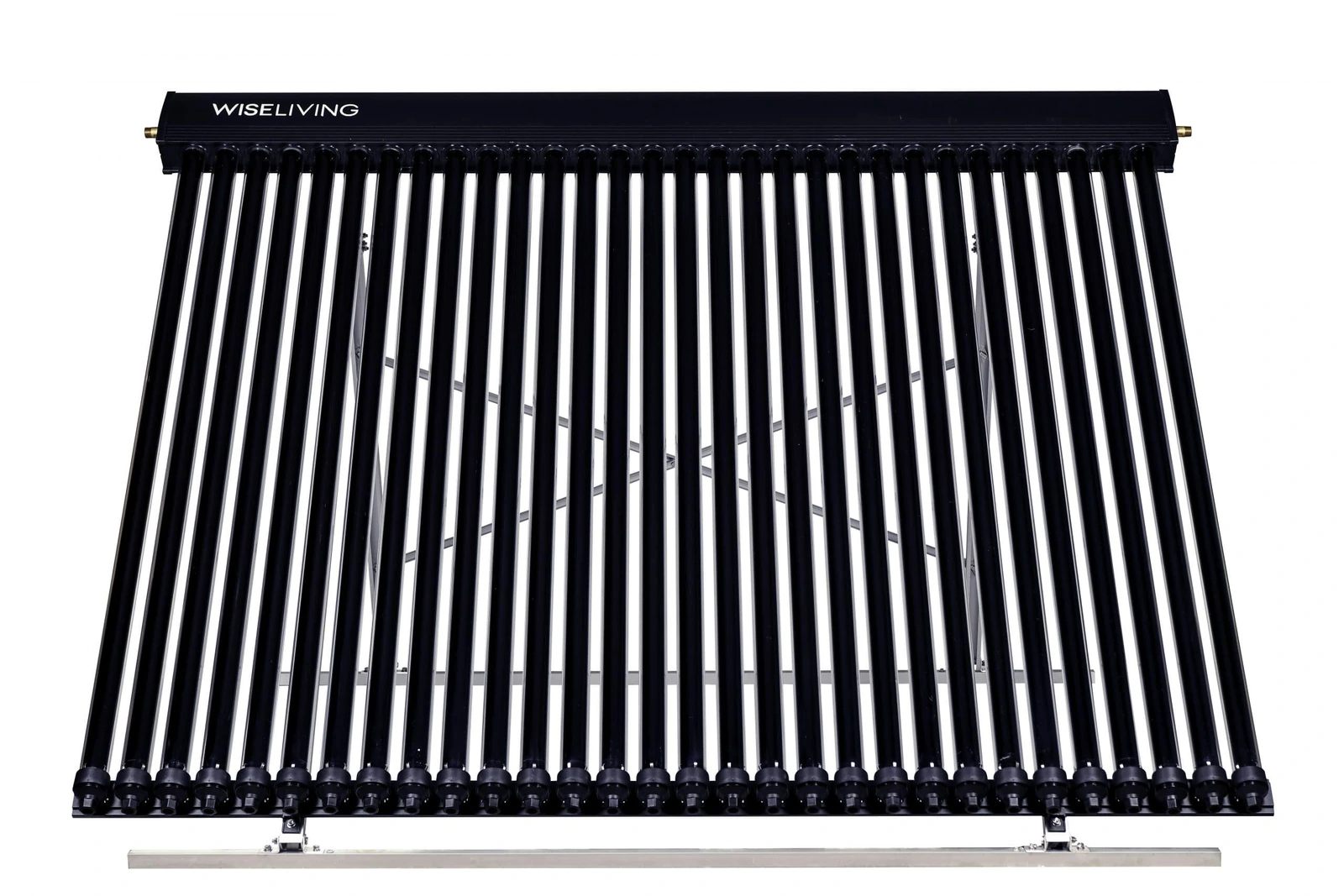
Solar hot water is a no-brainer in Australia for households of 3+ — payback of 6–8 years, then 20+ years of near-free hot water. We supply Apricus (evacuated tube), Rheem Loline (close-coupled), Solahart and Stiebel Eltron.
Roof orientation matters — north is best, NE/NW good, E/W still useful, south is poor. We'll assess via Google Earth before specifying.
The collector is only half of a solar hot water system. The savings depend just as much on the roof it sits on, the climate it has to survive and how the booster is set. These are the questions we work through on site.
If you already have a large rooftop solar PV array, a heat pump water heater running in the middle of the day can be a simpler alternative to solar thermal collectors, with no extra roof plumbing. Where roof space is limited or PV is not planned, solar hot water remains one of the most effective ways to cut water-heating energy for a household of three or more. We compare both honestly before you commit.
See our solar and heat pump hot water service, the plate heat exchangers used in glycol circuits, and our solar hydronic heating guide if you want the sun to help with space heating too.
Written from on-site experience by the AHHAC Technical Team.
AHHAC's in-house design and service team — licensed plumbers and hydronic engineers (Lic 262528C) who have designed and installed 2,400+ hydronic heating, cooling and hot water systems across Australia since 1998.
We only specify equipment after a heat-loss and system-compatibility check, then supply, install and commission it with our own licensed plumbers to AS/NZS 3500 (plumbing) and AS/NZS 5601 (gas), register the manufacturer warranty and service it for the life of the system.
Flat plate: cheaper, simpler, fine for warm climates and mild conditions. Evacuated tube: more efficient in cold/cloudy conditions, better for southern Australia and high-altitude sites. Both work — we recommend based on location and roof orientation.
North is best (full sun-tracking); NE/NW good (~80% of optimal); E/W still useful (~60%); south is generally not viable. We assess via Google Earth or site visit before specifying. Roof pitch also matters — 22–35° is ideal in most AU latitudes.
Small-scale Technology Certificates (STCs) apply to registered solar and heat pump water heaters — the value depends on the model, postcode and year. State programs sometimes add more. We confirm eligibility at quote and handle all paperwork as part of installation.
"AHHAC delivered our 22-zone underfloor system on time, on budget and to spec. The crew were tidy, the documentation was thorough, and the commissioning was textbook."
"We've worked with AHHAC for 17 years. They've installed and serviced our hot water plant across three commercial buildings — and they pick up the phone on weekends."
"Three mobs quoted us; AHHAC's design was the only one based on a proper heat-loss calculation. The system runs beautifully — the others would've been oversized and expensive."