★★★★★
"AHHAC delivered our 22-zone underfloor system on time, on budget and to spec. The crew were tidy, the documentation was thorough, and the commissioning was textbook."
David Chen
Custom Builder · Mosman, NSW
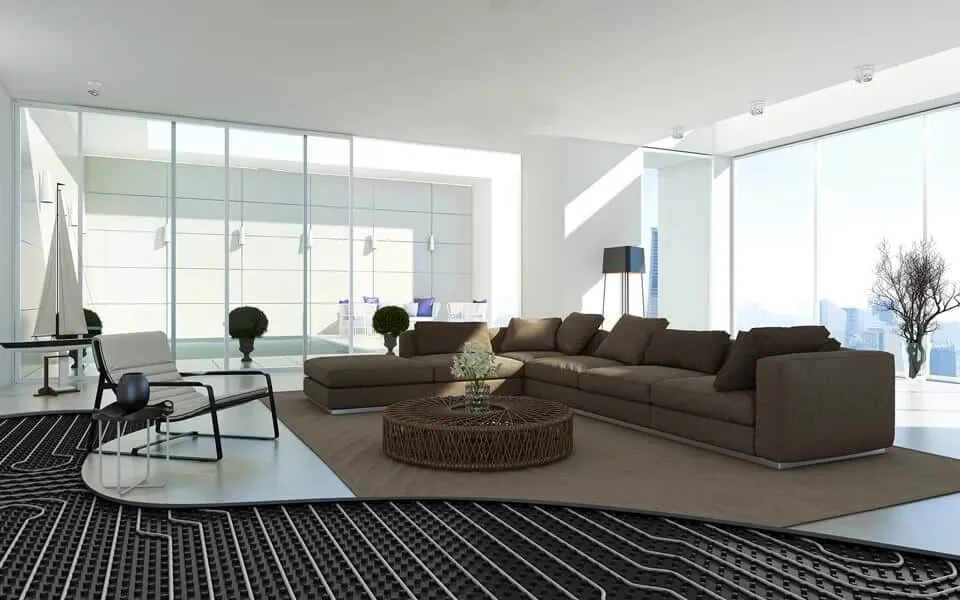
Radiant heating and cooling work via electromagnetic radiation — the same way the sun warms your face on a winter morning. Here's why it feels so different.
Conventional heating works by convection — warming the air, which then warms you. Radiant heating works by direct electromagnetic energy transfer — your body absorbs heat directly from warm surfaces around you.
The result is that radiant systems feel warmer at lower air temperatures. A room with a 22°C floor and 18°C air feels just as warm as a room with 23°C air everywhere — but uses far less energy.
Radiant systems warm objects (including your body) directly via electromagnetic radiation — like the sun warming your face on a winter morning. Conventional convective heating only warms the air. The result: radiant feels warmer at lower air temperatures, saving 15–25% energy.
No — well-designed underfloor systems run a floor surface temperature of 24–28°C — pleasantly warm to bare feet but never uncomfortable. We follow the EN1264 standard for floor surface limits.
Most finishes work — stone, marble, slate, tile, engineered timber, vinyl and most carpets. Solid hardwood needs species and humidity considerations. We design the system around your finish choice.
"AHHAC delivered our 22-zone underfloor system on time, on budget and to spec. The crew were tidy, the documentation was thorough, and the commissioning was textbook."
"We've worked with AHHAC for 17 years. They've installed and serviced our hot water plant across three commercial buildings — and they pick up the phone on weekends."
"Three mobs quoted us; AHHAC's design was the only one based on a proper heat-loss calculation. The system runs beautifully — the others would've been oversized and expensive."