★★★★★
"AHHAC delivered our 22-zone underfloor system on time, on budget and to spec. The crew were tidy, the documentation was thorough, and the commissioning was textbook."
David Chen
Custom Builder · Mosman, NSW
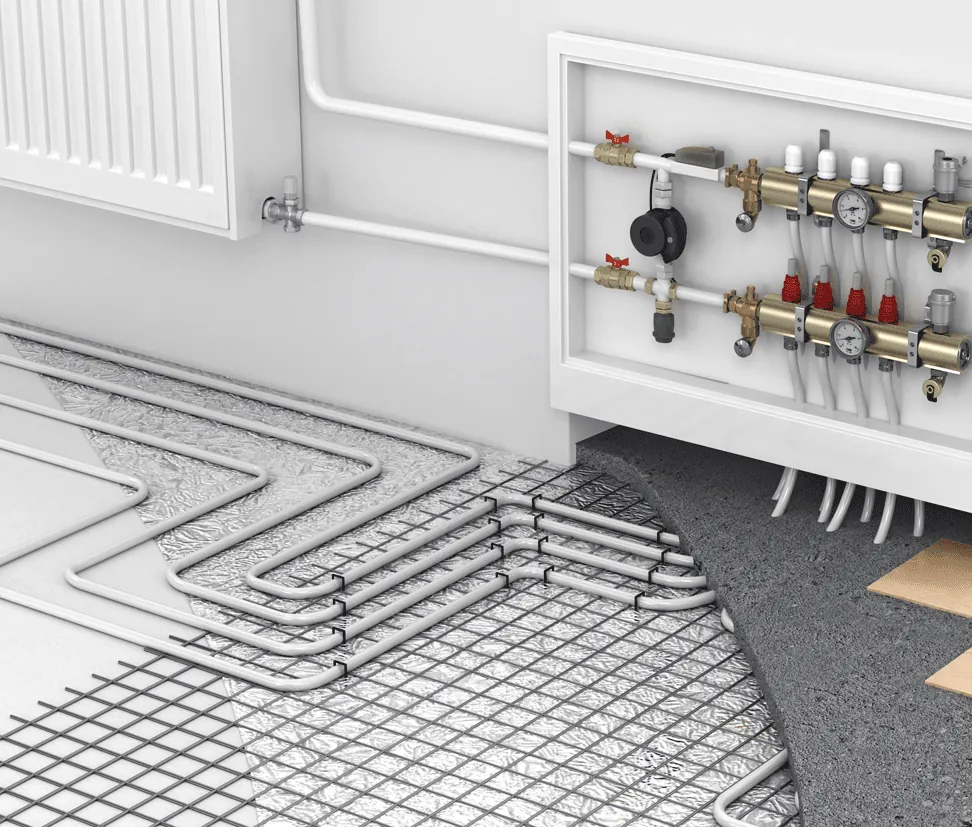
Hydronic underfloor heating Sydney and Australia-wide — in-slab, in-screed and direct-under PEX-A pipework delivering radiant warmth from the ground up. The most luxurious and most efficient way to warm a home. No visible plant, no noise, even temperatures every room.
Hydronic underfloor heating circulates heated water through PEX (cross-linked polyethylene) pipes installed beneath your floor finish. Water is heated in a boiler or heat pump, then fed through pipes which warm the floor — and the floor in turn provides gentle radiant heat throughout the room.
It's the most efficient form of heating you can install, and it's completely invisible. No radiators on walls. No vents in ceilings. Just a warm, comfortable floor and a beautifully even room temperature.
We install all three types — and the right choice depends on whether you're building new or renovating, and how fast you want the system to respond.
Slab heating is for new builds: PEX pipes are laid within the concrete slab itself before it's poured. The slab becomes a thermal mass with significant heat-storage capacity, but takes 24–48 hours for full effect. Ideal for homes that run heating consistently through cooler months.
Screed heating places pipes on a waterproofing membrane beneath a self-levelling screed layer (30–35mm). Faster response than slab systems because the heating layer is closer to the surface. Suitable for renovations and new builds.
Direct under-floor surface installation places pipes directly beneath timber, tiles, stone or carpet. Fastest response time of all three but more fragile during installation. Best for renovations where slab work isn't possible.
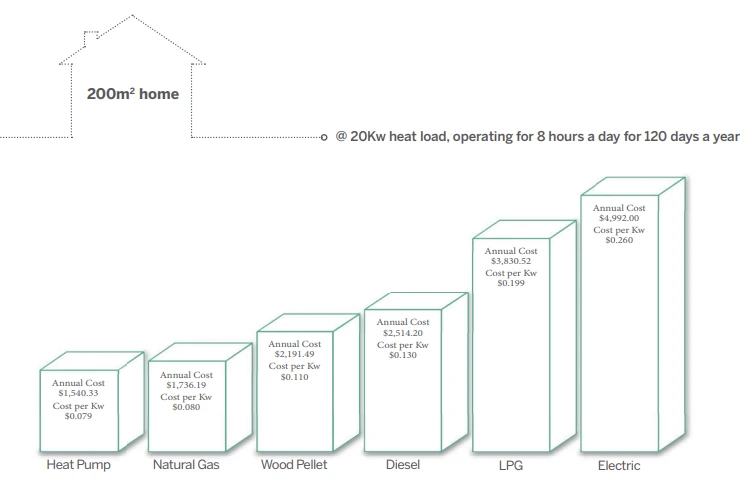
The big advantage of hydronic is that it can run on almost any heat source. The chart below shows typical running costs across all common options.
Heat pumps come out cheapest in most modern Australian homes. Pair an air-source or geothermal heat pump with rooftop solar PV and you're looking at near-zero net running cost over a year.
Solar hydronic + a thermal store can offset 50–80% of annual heating energy. Wood pellet boilers shine in rural / off-grid builds. Gas remains a popular default, especially with reverse-cycle backup.
The same pipework that heats your underfloor in winter can also distribute chilled water in summer. We add a dew-point sensor and reverse the heat pump direction — and you get silent, even cooling that no ducted system can match. One network, two seasons.
A few decisions make or break the long-term performance of an underfloor system. We walk every client through these before quoting:
(1) Heat source — gas boiler, air-source heat pump, geothermal, or solar with backup. (2) Boiler / heat pump location — needs ventilated service area, garage or external spot. (3) Type of underfloor (slab / screed / direct). (4) Thermostat & zoning strategy — per-room, per-floor, or whole-home. (5) Heating speed expectations — slab is slower / steadier, direct-under is faster / lower thermal mass.
Distributes heated water through your hydronic network with individual control valves on each loop — enables true per-room zoning and balancing.
EPS thermal-break board (R 1.0) that creates a barrier between slab and screed, reflecting heat upward into the room rather than down into the slab.
The most flexible PEX pipe available — tighter bend radius means more design flexibility around fixtures, drains and structural elements.
Renovation system with just 15mm build-up height and very fast reaction time. Perfect for retrofitting underfloor heating into existing homes without major demolition.
Single and three-phase electric instantaneous water heating — a compact electric option for smaller hydronic networks where gas isn't available.
Yes — we use a low-profile in-screed system: 12mm pipework laid in a 30–35mm self-levelling screed over your existing subfloor. Compatible with engineered timber, tile, stone, vinyl and most carpets.
For new builds: pipework laid in 1–2 days, then commissioned at handover. For whole-home retrofits with in-screed: typically 5–10 days for an average home, depending on size and floor finish.
Engineered hardwood handles underfloor heating well — solid hardwood needs species and humidity considerations. We'll spec the design for the chosen finish, including max floor surface temperature limits.
In-slab underfloor takes 2–8 hours to bring the slab up to temperature, so it runs as a steady, low-temperature background warmth rather than switching on and off. In-screed retrofits respond a little faster. If you want fast, on-demand heat for a single room, radiators are the better emitter.
Yes — on a reversible heat pump the same underfloor loops carry warm water in winter and chilled water in summer, giving silent floor heating and cooling from one all-electric system. A dew-point control prevents any condensation in humid weather.
"AHHAC delivered our 22-zone underfloor system on time, on budget and to spec. The crew were tidy, the documentation was thorough, and the commissioning was textbook."
"We've worked with AHHAC for 17 years. They've installed and serviced our hot water plant across three commercial buildings — and they pick up the phone on weekends."
"Three mobs quoted us; AHHAC's design was the only one based on a proper heat-loss calculation. The system runs beautifully — the others would've been oversized and expensive."