★★★★★
"AHHAC delivered our 22-zone underfloor system on time, on budget and to spec. The crew were tidy, the documentation was thorough, and the commissioning was textbook."
David Chen
Custom Builder · Mosman, NSW
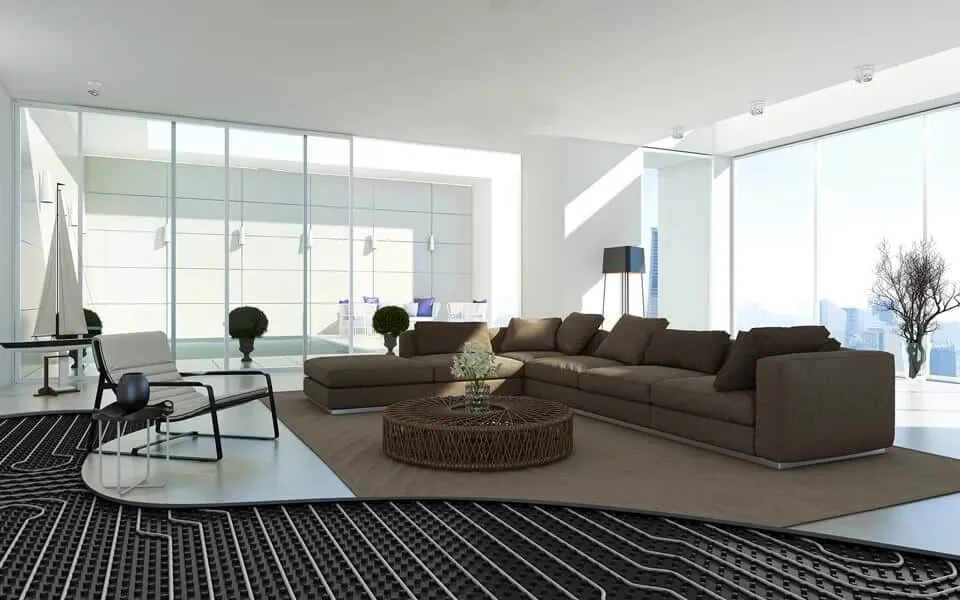
Roof-mounted evacuated-tube solar collectors feed your hydronic network — free heat from the sun, paired with an insulated thermal store so you have hot water and heating on demand, day or night.
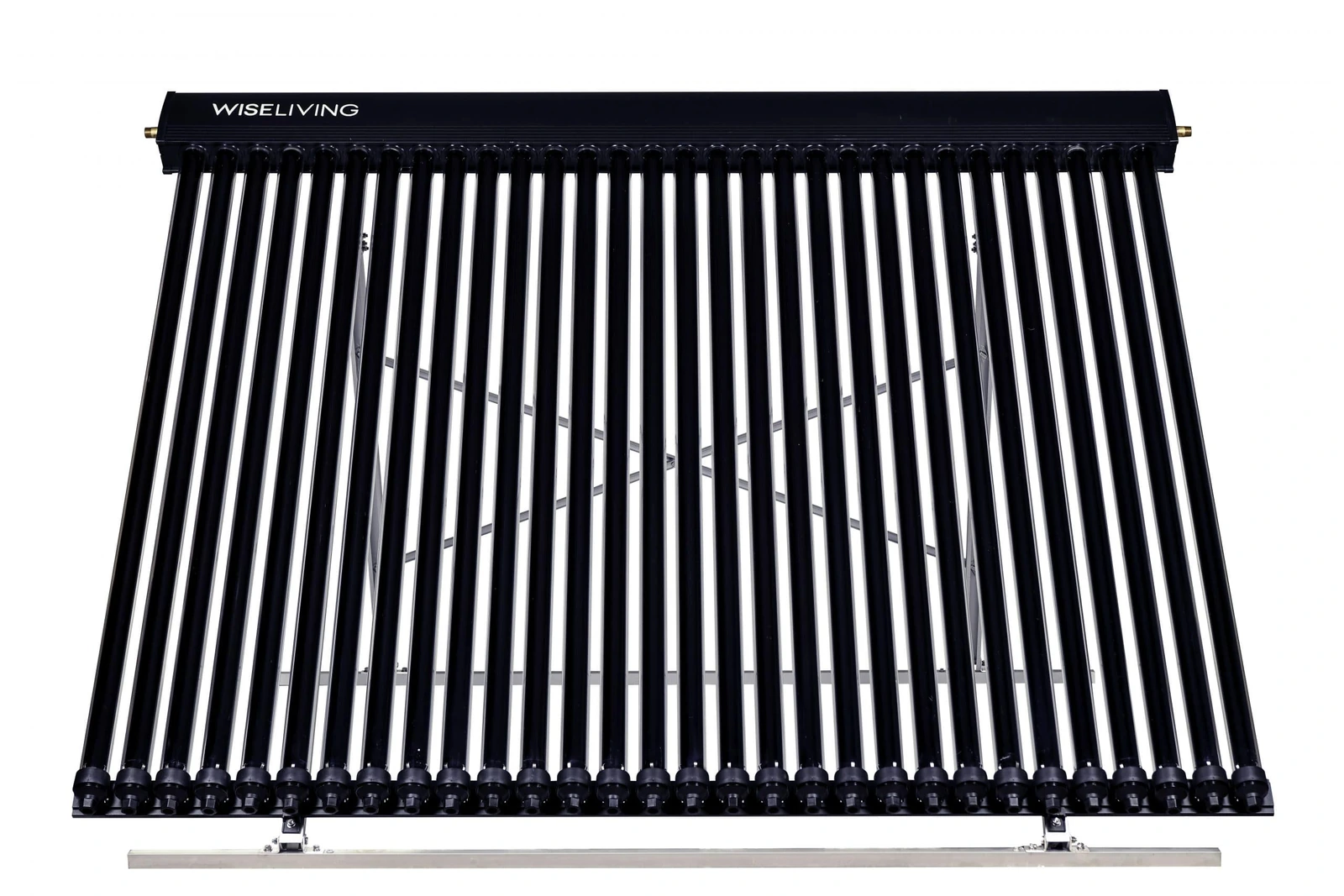
Solar hydronic (also called solar thermal) heating differs from typical solar panels. Where rooftop solar PV generates electricity, solar thermal collectors heat a glycol-water fluid directly inside the tubes — and that hot fluid feeds your hot water cylinder, your radiators, your underfloor loops, or all three.
It's the most efficient way to use Australian sun for the comfort layer of your home. A properly sized array supplies 50–80% of your annual hydronic heating demand and 60–90% of your hot water demand.
Sun shines on the rooftop solar collectors and heats the glycol-water fluid inside the evacuated tubes. The fluid is pumped through copper heat-exchange coils inside an insulated thermal store tank installed in your service area.
Because evacuated tubes don't require direct sunlight to perform — they capture diffused light too — the system continues to produce useful heat through cooler seasons and overcast days. The insulated tank holds water at the required temperature for several days, smoothing out cloudy stretches.
Hot water from the thermal store is then fed on demand to your hot water taps, your hydronic radiators, or your underfloor heating loops. Continuous circulation through the collectors ensures hot water is always available.
There are four main reasons our clients choose solar hydronic — and once they're in, they almost never go back to gas-only.
First, it's environmentally friendly. Solar is an emission-free source of energy, and a system properly sized to your home will dramatically decrease your greenhouse gas emissions over its 30+ year life.
Second, it's cheaper to run. Once installed, the energy itself is free — your only ongoing cost is a tiny circulation pump.
Third, it's low-maintenance. Solar thermal technology is mature and simple. With minimal moving parts, the systems require very little upkeep beyond an annual glycol-fluid check.
Fourth, you get consistent hot water. Continuous heating combined with thermal-store storage means you have hot water available whenever you need it — even if the sun hasn't shone for days.
Thermal store tank designed for solar systems running with a gas or oil boiler backup. Hygienic stainless heat exchanger and integrated pump set.
Thermal store engineered for solar paired with an electric heat pump — combines two energy sources into a single buffer for whole-home heat and hot water.
Pressurised flat-plate solar collectors for residential roof-mounted installs. Compact and easy to integrate with existing roof structures.
Drain-back configuration for harsher climates — system drains automatically when collectors aren't in use, eliminating freeze risk.
In Australian conditions, a properly sized solar thermal array supplies 50–80% of your annual hydronic heating demand and 60–90% of your hot water demand. The remainder is covered by a backup heat source (gas, heat pump or electric).
Solar thermal is roughly 3–4× more efficient per square metre of roof for water heating specifically. We often install both — PV for general electricity (powering a heat pump), thermal for direct heat — for the best overall system.
Yes — solar thermal systems are eligible for Small-scale Technology Certificates (STCs) under the Australian Renewable Energy Target. Typical rebates are $1,000–$2,000 off install. We handle the paperwork.
"AHHAC delivered our 22-zone underfloor system on time, on budget and to spec. The crew were tidy, the documentation was thorough, and the commissioning was textbook."
"We've worked with AHHAC for 17 years. They've installed and serviced our hot water plant across three commercial buildings — and they pick up the phone on weekends."
"Three mobs quoted us; AHHAC's design was the only one based on a proper heat-loss calculation. The system runs beautifully — the others would've been oversized and expensive."