★★★★★
"AHHAC delivered our 22-zone underfloor system on time, on budget and to spec. The crew were tidy, the documentation was thorough, and the commissioning was textbook."
David Chen
Custom Builder · Mosman, NSW
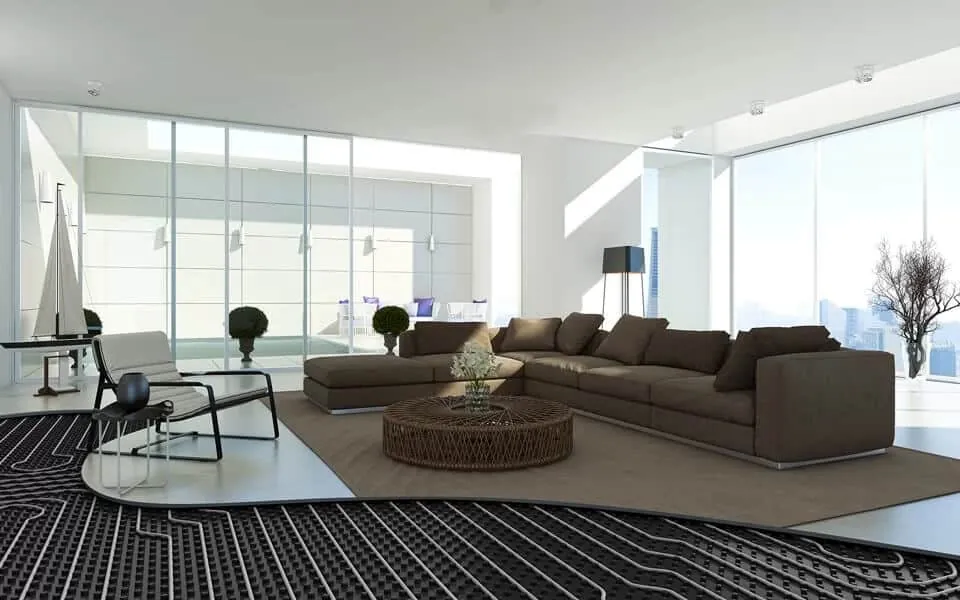
Heat pump hydronic heating from authorised Maxa, Immergas and Viessmann suppliers. Air-source and geothermal heat pumps for hydronic heating, cooling and hot water across Sydney, Melbourne and Queensland.
Heat pump hydronic heating uses an air-source heat pump instead of a gas boiler to heat the water flowing through your radiators, underfloor loops or fan coils, delivering 3.5–5.5 kW of heat for every 1 kW of electricity. It typically costs 65–75% less to run than the same system on gas, and it reverses in summer to supply chilled water for cooling. AHHAC supplies and installs Maxa, Immergas and Viessmann heat pumps across Sydney and Australia.
Reviewed by the AHHAC Technical Team — licensed plumbers & hydronic engineers, NSW Lic 262528C.How we write & review
A heat pump hydronic heating system replaces the gas or electric boiler in your hydronic loop — driving the same radiator, underfloor and fan-coil network with all-electric refrigerant-cycle efficiency. Heating COP of 3.5–5.5 means every 1 kW of electricity becomes 3.5–5.5 kW of heat in the room — typically 65–75% lower running cost than the same hydronic system on gas.
AHHAC is an authorised supplier of Italian-engineered Maxa heat pumps (i-290 R290 and i-32V5 R32 monoblock series), Immergas Magis heat pumps, and Viessmann Vitocal hydronic heat pumps. We also install Mitsubishi Ecodan, Daikin Altherma and Bosch Compress where the project calls for a Japanese or German engineering footprint.
Heat pump hydronic heating is the lowest-carbon, lowest-running-cost option for any Australian home with rooftop solar PV. The same unit that heats your radiators or underfloor in winter reverses cycle in summer to deliver chilled water through the same pipework — silent, allergen-free hydronic cooling that no ducted system can match.
Sydney and NSW homeowners pair their heat pump hydronic system with a 5–10 kW solar PV array for near-zero net annual energy cost. The 30+ year design life of the hydronic distribution means only the heat pump itself needs replacement at the 12–15 year mark — and even then, just swap the outdoor unit, the rest of the system keeps running.
Market-leading Italian R290 monoblock heat pump for hydronic heating. Heating COP 4.94, 6–27 kW output, the only R290 monoblock on QLD's Type B Gas Device Register.
Italian-engineered R32 inverter monoblock heat pump. 11 chassis sizes from 6.1 to 17.9 kW heating, COP 4.9. VIPAC certified for Australian conditions.
Italian-engineered air-source heat pump hydronic range — Magis Pro and Audax monoblocks for retrofit-friendly installs, plus the Hercules Pro hybrid (heat pump + gas) for cold-climate sites.
German-engineered hydronic heat pumps with R290 DHW models and full hydronic heating units. Vitocal 161-A heat pump COP 4.15.
A heat pump's brochure COP is a best case. Whether your system lives anywhere near it depends on decisions made before the unit is ordered. These are the five we work through on every heat pump hydronic heating design, and the ones we most often find wrong when we are called in to fix someone else's install.
We will tell you if it does not suit. An existing high-temperature radiator system that cannot be upsized, in a home with mains gas, is often better served by a modern condensing boiler. A heat pump also cannot make up for a poorly insulated home; ceiling insulation and draught-sealing usually come first.
Get these right and you see the running cost the numbers promise. For model choice, read our Maxa vs Viessmann vs Immergas comparison or the Maxa i-290 R290 heat pump page. Sydney homeowners can see how we design for local conditions on our heat pump hydronic heating Sydney page, and buffer options are covered under hot water and buffer tanks.
Written from on-site experience by the AHHAC Technical Team.
AHHAC's in-house design and service team — licensed plumbers and hydronic engineers (Lic 262528C) who have designed and installed 2,400+ hydronic heating, cooling and hot water systems across Australia since 1998.
We only specify equipment after a heat-loss and system-compatibility check, then supply, install and commission it with our own licensed plumbers to AS/NZS 3500 (plumbing) and AS/NZS 5601 (gas), register the manufacturer warranty and service it for the life of the system.
i-290 uses R290 (propane) refrigerant — natural, GWP=3, highest efficiency, QLD Type B Gas approved. i-32V5 uses R32 — broader chassis range (11 sizes vs 3), GWP 675. Both are made in Italy with 7-year domestic warranty. We'll match to your project.
Yes — Maxa heat pumps are tested down to -15°C ambient. Australian climates are well within operating range, including the Snowy region. Performance drops slightly in extreme cold but they continue to deliver heat reliably.
Heat pump if: you want all-electric (works with solar PV), want lowest running cost long-term, want integrated cooling. Gas boiler if: you have cheap gas, want fastest warm-up, want lowest install cost. We spec both options for comparison.
A quality hydronic heat pump has a 15–20 year design life, with a 5–7 year compressor warranty and up to 7 years on Maxa domestic units. Annual servicing keeps efficiency high and warranties valid — we offer service contracts that handle it.
Yes — four-function units like the Maxa i-290 provide space heating, chilled-water cooling and domestic hot water to 78 °C from one machine. It's the most compact, efficient way to cover all three from a single all-electric, solar-ready system.
"AHHAC delivered our 22-zone underfloor system on time, on budget and to spec. The crew were tidy, the documentation was thorough, and the commissioning was textbook."
"We've worked with AHHAC for 17 years. They've installed and serviced our hot water plant across three commercial buildings — and they pick up the phone on weekends."
"Three mobs quoted us; AHHAC's design was the only one based on a proper heat-loss calculation. The system runs beautifully — the others would've been oversized and expensive."