★★★★★
"AHHAC delivered our 22-zone underfloor system on time, on budget and to spec. The crew were tidy, the documentation was thorough, and the commissioning was textbook."
David Chen
Custom Builder · Mosman, NSW
Hydronic heating, cooling and hot water for Woollahra homes — designed and installed by AHHAC, Sydney's hydronic specialists, from our nearest showroom in Punchbowl.
Hydronic heating in Woollahra is usually a mix of European panel radiators or ThermaSkirt skirting heating for Victorian terraces and Federation homes, and in-slab underfloor for rebuilds and rear extensions, all driven by an all-electric heat pump. Underfloor with a heat pump runs around $30,000–$55,000 for a typical home, and radiators cost less. AHHAC designs each Woollahra system from a room-by-room heat-loss calculation and installs from our Punchbowl showroom.
Reviewed by the AHHAC Technical Team — licensed plumbers & hydronic engineers, NSW Lic 262528C.How we write & review

 ImmergasSimeThermaSkirt™
Woollahra is one of Sydney's most prestigious Eastern Suburbs — a leafy enclave of Victorian terraces, grand Federation homes and contemporary luxury rebuilds, where owners expect comfort and quality without compromise. Its cool, tree-shaded streets and solid period homes make it a natural fit for hydronic heating: warmth that's silent, even and invisible, and that respects heritage interiors. AHHAC designs and installs the full hydronic range across Woollahra, Paddington and Bellevue Hill from our Punchbowl showroom, as part of our wider hydronic heating Sydney service.
Sydney's winters are mild, but Woollahra's terraces and period homes are often solid masonry with high ceilings and generous glazing — which means they get genuinely cold on winter mornings and evenings, and they lose heat fast. Hydronic answers both. It warms surfaces rather than air, so the comfort is even from floor to ceiling with no draughts or fan noise, and it's silent and allergen-free — a world away from a wall-mounted air conditioner. For owners who've restored a Woollahra terrace or built a luxury rebuild, hydronic delivers the calm, even warmth these homes deserve, at a low running cost.
Woollahra is a heritage suburb at heart: rows of Victorian and Italianate terraces, grand Federation homes, and — increasingly — contemporary luxury rebuilds behind preserved façades. Many properties sit within heritage conservation areas, so any heating system has to respect the fabric of the home. That's where hydronic shines, and where a proper heat-loss calculation matters: high ceilings and single-glazed period windows increase heat loss, so sizing must be done room by room. For rebuilds and major renovations we favour in-slab hydronic underfloor heating; for terraces where the floors can't be lifted, European panel radiators and heritage-friendly skirting heating are the answer.
The right system follows the house. For a Woollahra rebuild or a renovation with new floors, underfloor driven by an all-electric heat pump gives the most even, lowest-running-cost result. For a heritage terrace or a staged renovation, radiators warm quickly and retrofit without disturbing period floors. Many Woollahra homes use both — underfloor through the open-plan living areas, radiators in bedrooms and upstairs — all run from a single heat source. If you're deciding, our comparison of underfloor heating vs radiators lays out cost, comfort, response time and retrofit-ability side by side.
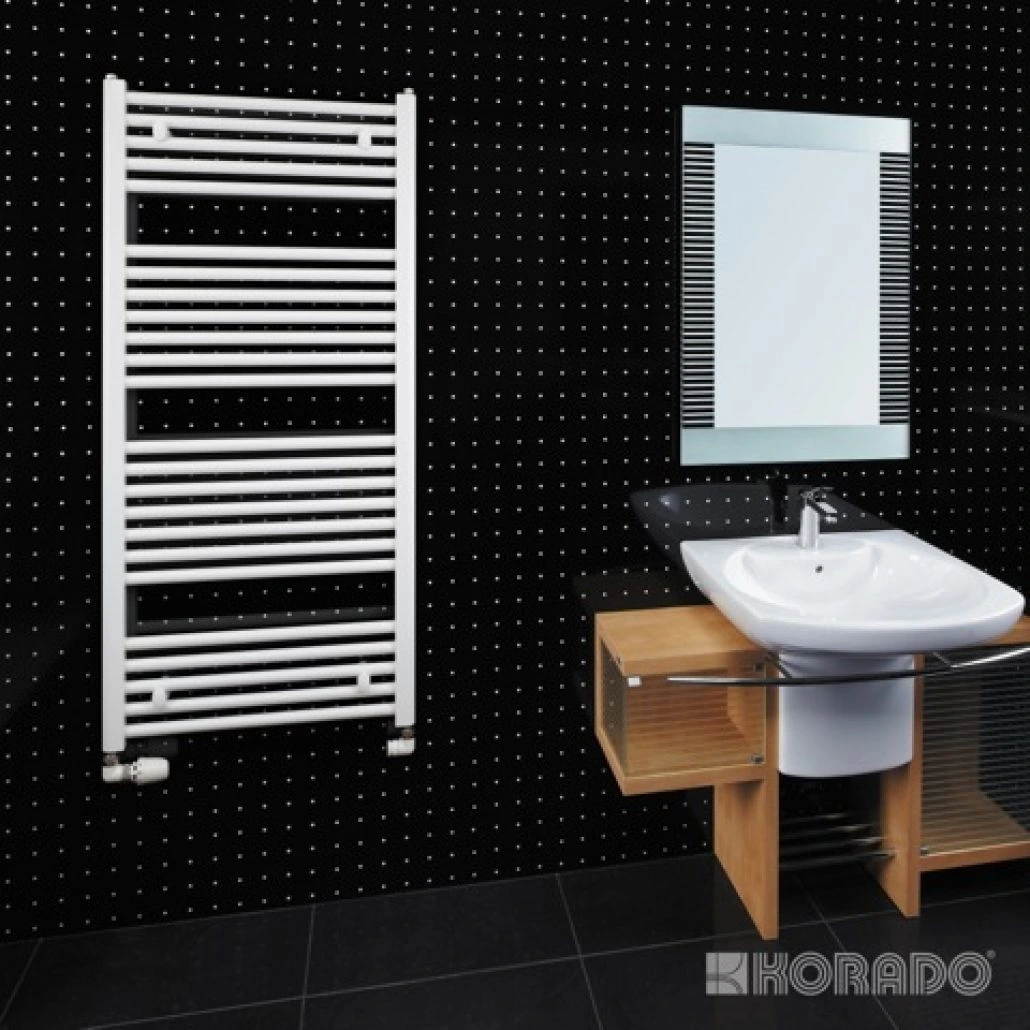
Many of Woollahra's terraces are heritage-listed, and their owners won't accept ducting bulkheads or visible plant marring restored interiors. Hydronic is the heritage-friendly solution. European panel and restored cast-iron column radiators suit period rooms and install without slab works; for the most discreet option, ThermaSkirt skirting-board heating replaces the skirting around each room and vanishes into the architecture, warming from the perimeter with nothing on show — ideal for a Woollahra or Paddington terrace where every original detail matters.
An all-electric heat pump runs at a seasonal COP of 4 or more, a fraction of the cost of gas or resistive electric, and pairs perfectly with rooftop solar — pushing daytime running cost close to zero. On a reversible unit, the same system reverses in summer to provide silent chilled-water cooling through the underfloor or fan coils, so one all-electric plant keeps a home comfortable all year — valuable in the warm Eastern Suburbs summer. AHHAC serves Woollahra from our Punchbowl showroom; every job runs the same way — consult, heat-loss calculation and fixed-fee design within 24 hours, in-house install, and full commissioning. Beyond Woollahra we cover Paddington, Bellevue Hill, Double Bay, Bondi and the wider Eastern Suburbs — see our hydronic heating Sydney page.
A Woollahra terrace is a beautiful house to heat and an awkward one to install in. Most have a narrow frontage, no side access and a party wall on each side, so every radiator, length of pipe and piece of plant comes in through the front door and down the hall. We plan the whole job around that from the first site visit, and it shapes three big decisions.
With no side passage, the outdoor heat pump usually ends up in the rear courtyard or on the flat roof of a rear extension. In a courtyard a few metres from the neighbour's back door, noise matters, so we choose the quietest position available, mount the unit on anti-vibration feet and keep it off the shared wall. In a conservation area the street elevation stays untouched, with nothing on the front façade or balcony.
How the pipework travels. In a two- or three-storey terrace we run a vertical riser through a built-in cupboard or beside the stair, then distribute between floor joists by lifting a few boards in each upstairs room. That keeps pipework away from the ornate plaster ceilings and cornices downstairs, which are far harder to repair than floorboards. Lower-ground rooms on sandstone footings are often the coldest and dampest in the house and usually need a larger radiator than their size suggests.
Mixing emitters. The typical Woollahra renovation pairs period front rooms with a modern rear extension on a new slab. That extension is the one place underfloor heating really makes sense, laid before the pour; the original rooms get panel radiators or skirting heating, the approach shown in our heritage Sydney terrace case study. One hydronic heat pump drives both, on separate zones, because the slab responds over hours and the radiators within minutes.
Summer is worth planning for too. Upstairs bedrooms under a slate or iron roof are usually the hottest rooms in a terrace, and a reversible heat pump can feed a small fan coil there on the same pipework. Installs are run and serviced from our Punchbowl showroom; see hydronic heating Sydney for the wider Eastern Suburbs service area.
Written from on-site experience by the AHHAC Technical Team.
AHHAC's in-house design and service team — licensed plumbers and hydronic engineers (Lic 262528C) who have designed and installed 2,400+ hydronic heating, cooling and hot water systems across Australia since 1998.
We design hydronic heating from a room-by-room heat-loss calculation, install it with our own licensed plumbers to AS/NZS 3500 (plumbing) and AS/NZS 5601 (gas), commission and document it, and service it for the life of the system. Nothing is subcontracted out.
Last updated · AHHAC — serviced from Punchbowl
"AHHAC delivered our 22-zone underfloor system on time, on budget and to spec. The crew were tidy, the documentation was thorough, and the commissioning was textbook."
"We've worked with AHHAC for 17 years. They've installed and serviced our hot water plant across three commercial buildings — and they pick up the phone on weekends."
"Three mobs quoted us; AHHAC's design was the only one based on a proper heat-loss calculation. The system runs beautifully — the others would've been oversized and expensive."